
The Hidden Gold Mine: How Data Cleaning and Auditing Saves Your Money
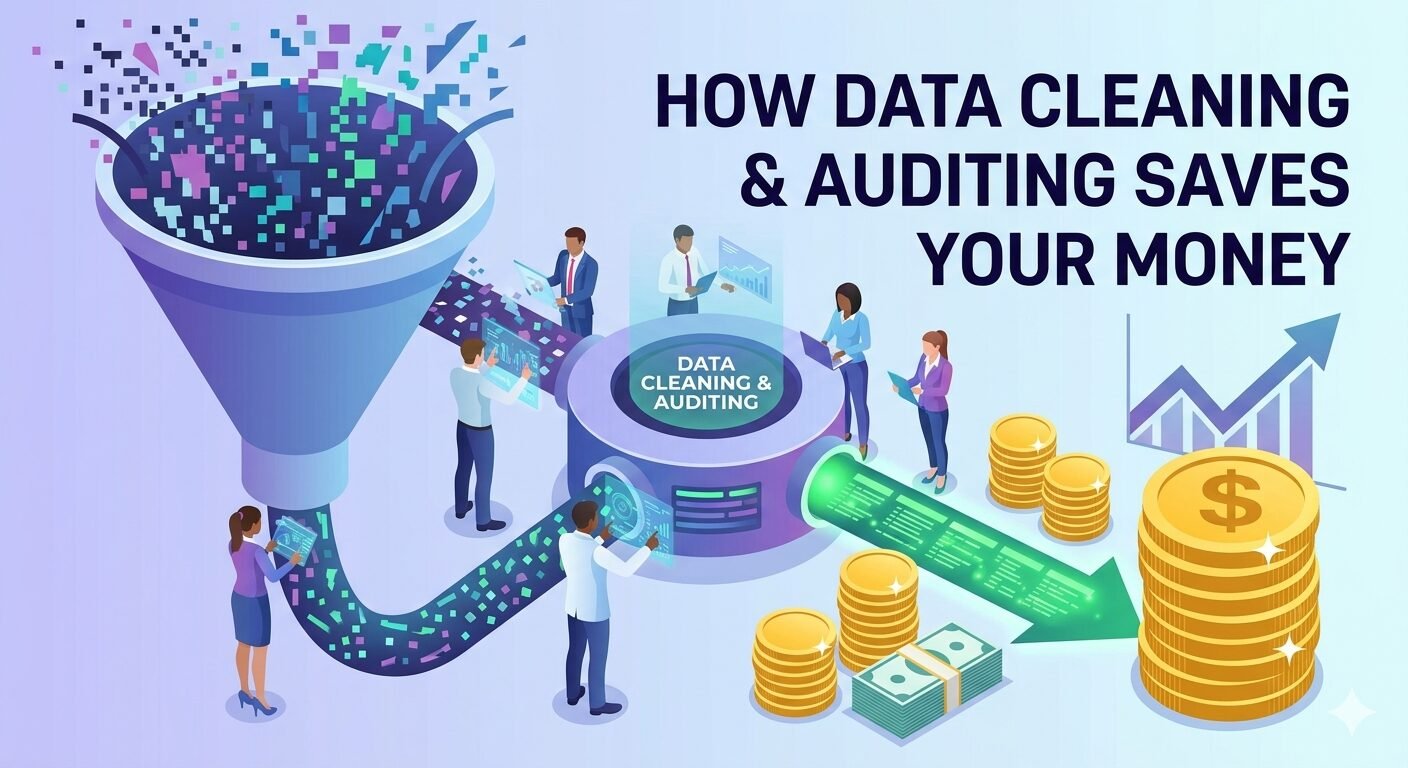
In the modern business landscape, data is often touted as “the new oil.” But there is a critical distinction that many organizations overlook: raw oil is useless—and sometimes even hazardous—until it is refined. The same applies to your data.
If your database is cluttered with duplicates, outdated contact information, or formatting errors, it isn’t an asset; it’s a liability that is silently draining your budget. Here is how investing in Data Cleaning and Data Auditing directly impacts your bottom line.
1. Drastically Reducing Marketing Waste
Marketing is often the first department to feel the sting of “dirty” data. Imagine sending a high-end direct mail catalog to 10,000 leads, only to find that 15% of the addresses are invalid and another 10% are duplicates.
By auditing and cleaning your mailing lists, you ensure that every dollar spent on printing, postage, and digital ad targeting is reaching a unique, valid recipient. Data cleaning allows you to stop paying for “ghost” leads and start seeing a true Return on Investment (ROI).
2. Preventing Costly Operational Blunders
Bad data creates a “Butterfly Effect” in operations. A simple error in a shipping address can lead to:
- Failed delivery fees.
- The cost of processing returns.
- Additional customer service hours spent resolving the issue.
- The loss of the customer’s future lifetime value due to a poor experience.
Regular data auditing identifies these friction points before they become expensive logistical nightmares.
3. Smarter Decision Making (Avoiding the “GIGO” Trap)
Computer science has a golden rule: Garbage In, Garbage Out (GIGO). If your executive team is making strategic decisions based on skewed data, those decisions will be fundamentally flawed.
Perhaps you think a specific product is failing, but in reality, sales data was double-counted in another category. Or maybe you’re overstaffing a department based on inflated activity metrics. Data cleaning ensures that the “truth” you see in your dashboards is actually the truth, preventing million-dollar strategic mistakes.
4. Avoiding Compliance Fines and Legal Fees
With the rise of data privacy regulations like GDPR and CCPA, keeping “messy” data is no longer just a management issue—it’s a legal one.
- Data Auditing helps you identify what personal information you are holding and why.
- Data Cleaning ensures you aren’t retaining data longer than legally allowed or contacting people who have opted out.
The cost of a data audit is a fraction of the cost of a multi-million dollar regulatory fine.
5. Improving Employee Productivity
Your team’s time is money. If your sales representatives spend 20% of their day manually correcting CRM entries or calling disconnected phone numbers, you are losing one full day of productivity per week, per employee.
Clean data empowers your team to do the jobs they were hired for, rather than acting as manual data entry clerks.
The Bottom Line
Data cleaning and auditing should not be viewed as a “once-a-year” chore or a technical overhead. It is a proactive financial strategy. By ensuring your data is accurate, unique, and compliant, you stop the invisible leaks in your budget and turn your information into a streamlined engine for growth.
Is your data working for you, or are you working for your data? Now is the time to audit.