
Common E-commerce Data Integration Issues
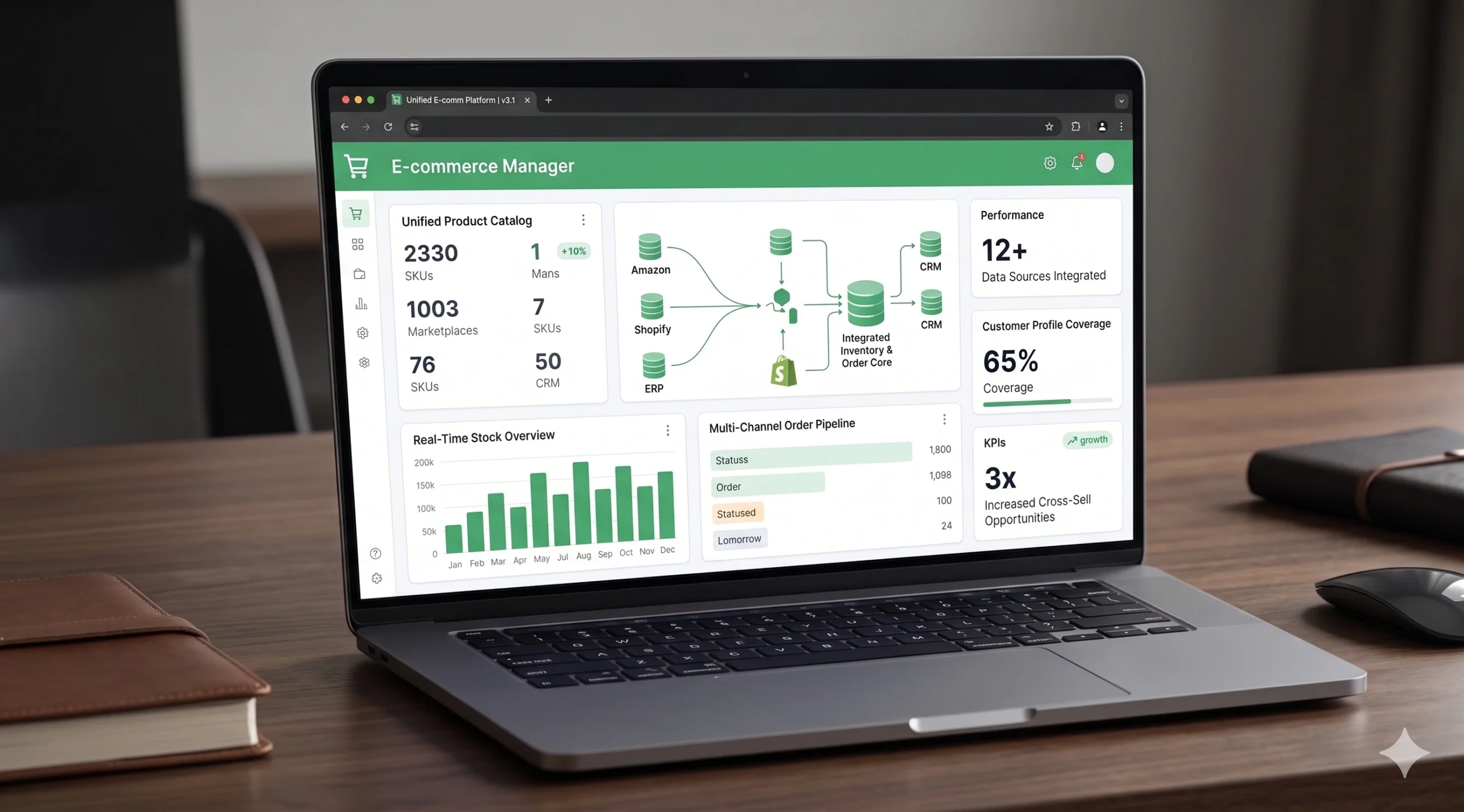
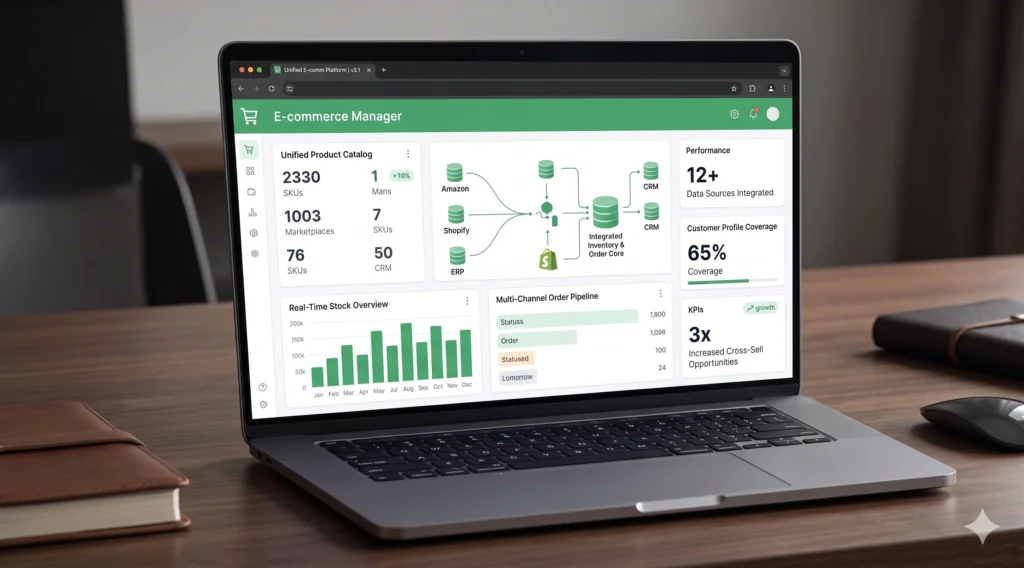
E-commerce data integration—the strategic practice of unifying disparate systems like your online store (Shopify, Magento), ERP (NetSuite, Microsoft Dynamics), CRM (Salesforce), and marketplaces (Amazon, eBay)—is the linchpin of a seamless omni-channel experience. When integration flows smoothly, your data is consistent, processes are automated, and you make informed decisions based on a unified view.
However, complex integrations rarely happen without friction. Failing to manage data flow effectively creates operational bottlenecks, erodes customer trust, and directly impacts your bottom line. This article explores the most pervasive e-commerce data integration issues and offers strategies to overcome them.
1. Persistent Siloed Systems and Data Fragementation
The most fundamental issue is data fragmentation. Retailers often use specialized applications that operate in isolation. When your product information is updated in the PIM but doesn’t automatically sync with your Magento storefront, or when sales data from Amazon isn’t reflected in your central ERP, you are dealing with siloed systems.
This fragmentation prevents a “single source of truth.” The result is a fractured view of your customer journey and inconsistent operations across platforms.
2. Poor Data Quality and Data Mapping Errors
Integration is only as good as the data being moved. When inconsistent data standards exist between systems (e.g., different date formats, varying SKU structures, or missing customer details), data mapping errors occur.
If your Shopify integration doesn’t map a unique customer identifier correctly to your CRM, you’ll end up with duplicate profiles, corrupted customer history, and highly inaccurate reporting. Inaccurate data in transit is sometimes harder to fix than fragmented data, as it quietly corrupts your long-term databases.
3. Inventory Sync Failures and Stockouts
Inventory synchronization is critical. A delay or failure in syncing inventory levels between your warehouse management system (WMS), ERP, and your front-end sales channels (like Adobe Commerce or BigCommerce) leads directly to overselling.
When a customer orders an item that is actually out of stock, it results in order cancellations, negative reviews, and customer churn. Conversely, poor visibility can lead to under-selling by holding buffer stock that isn’t actually needed.
4. High Latency and Real-Time Processing Delays
Customers expect near-instant updates. High latency in real-time data processing creates friction. While some data (like ERP product updates) can be batched, other events—like order placement, payment authorization, and shipping transactional emails—must happen immediately.
If an order placed on your website takes several hours to sync with your fulfillment system, the customer won’t receive their tracking number promptly. This creates anxiety and floods your support channels with “Where Is My Order?” (WISMO) queries. Efficient integration solutions prioritize near real-time sync for critical transactional data.
5. High Maintenance, Scalability, and Rigid Customizations
Custom-built, point-to-point integrations often become brittle over time. When one software vendor updates their API, the custom connector might break, requiring expensive developer intervention. These rigid, high-maintenance integrations hinder your ability to scale.
As you add new sales channels (e.g., TikTok Shop) or upgrade your ERP, a scalable integration platform (iPaaS) or a modern, robust middleware solution is necessary. Without scalability, your integration infrastructure becomes a bottleneck, preventing growth rather than enabling it.
Strategic Solutions for E-commerce Integration
Overcoming these data integration issues requires a shift from ad-hoc fixes to a robust strategic approach:
- Prioritize a Central Hub: Utilize a modern ERP, a Product Information Management (PIM) system, or a dedicated iPaaS (Integration Platform as a Service) to act as your central data hub, reducing the number of point-to-point connections.
- Invest in Data Governance: Define clear data standards, enforce strict data validation rules, and schedule regular data cleansing audits before data is allowed to sync.
- Adopt Robust Middleware: Instead of custom coding every connection, leverage middleware or iPaaS solutions designed for e-commerce. These platforms provide pre-built connectors, visual mapping tools, and monitoring capabilities.
- Implement API-First Design: Ensure your systems communicate via well-documented, standardized APIs, making future connections and updates simpler and less prone to breaking.
- Monitor and Automate Alerts: Implement proactive monitoring for your data flows. Use automated alerts to notify your team instantly if an integration fails, preventing prolonged downtime or corrupted data.
By addressing these common challenges head-on with modern solutions, you can build a resilient, automated data ecosystem that supports your business growth and delivers an exceptional customer experience.